1

About the project

Designing a reusable UX-to-product framework that turns agent knowledge graphs into scalable interfaces for operators and builders.

Designing a reusable UX-to-product framework that turns agent knowledge graphs into scalable interfaces for operators and builders.

Mobius needed a scalable way to create interfaces for many AI agents across tenants, industries, and use cases. I designed MetaUX, a graph-driven experience pattern that translates agent knowledge graphs into reusable product interfaces for both operators and builders.

Impact

Reduced baseline agent UI setup from roughly 1 month to 1 day for journeys covered by the pattern.

My role

Agent Experience Engineering Manager

2

What was to be built

Mobius builds AI-powered digital transformation products through agentic marketplaces. Enterprises can discover, purchase, configure, and deploy agent products. Each agent has capabilities, business logic, knowledge graphs, and governance rules.

CHALLENGE

The challenge was that every agent deployment still needed an interface. If every interface had to be manually designed, the product could not scale.

Marketplace

Marketplace

Agent purchased

Agent purchased

Tenant instance created

Tenant instance created

Graph instantiated

Graph instantiated

Agent interface needed

Agent interface needed

3

Problem Statement

The marketplace could identify and deploy new agent products, but the interface layer was still manual. Each new agent or tenant variation risked becoming a custom design effort. This created a bottleneck in scale, consistency, and future automation.

STRATEGY PROBLEM

If the marketplace could generate agent products, but interfaces still required manual design, the agentic loop was incomplete.

PRODUCT PROBLEM

Mobius needed a reusable product architecture for agent interfaces across different tenants, personas, and agent capabilities.

UX PROBLEM

Designing each agent UI manually created inconsistent journeys, repeated patterns, and slow delivery.

4

My Role & Responsibilities

I led the UX architecture and pattern definition for MetaUX, translating graph-based agent structures into reusable interface patterns.
Defined the graph-to-interface grammar

Defined the graph-to-interface grammar

Mapped B-types to interface patterns

Mapped B-types to interface patterns

Identified reusable UI rules for future agentification

Identified reusable UI rules for future agentification

Connected UX decisions to product scalability and marketplace strategy

Connected UX decisions to product scalability and marketplace strategy

Designed operator and builder journeys

Designed operator and builder journeys

UX

UX

Product

Product

Strategy

Strategy

5

Core Insight

Interfaces Should Be Derived from the Agent Graph.

Interfaces Should Be Derived from the Agent Graph.

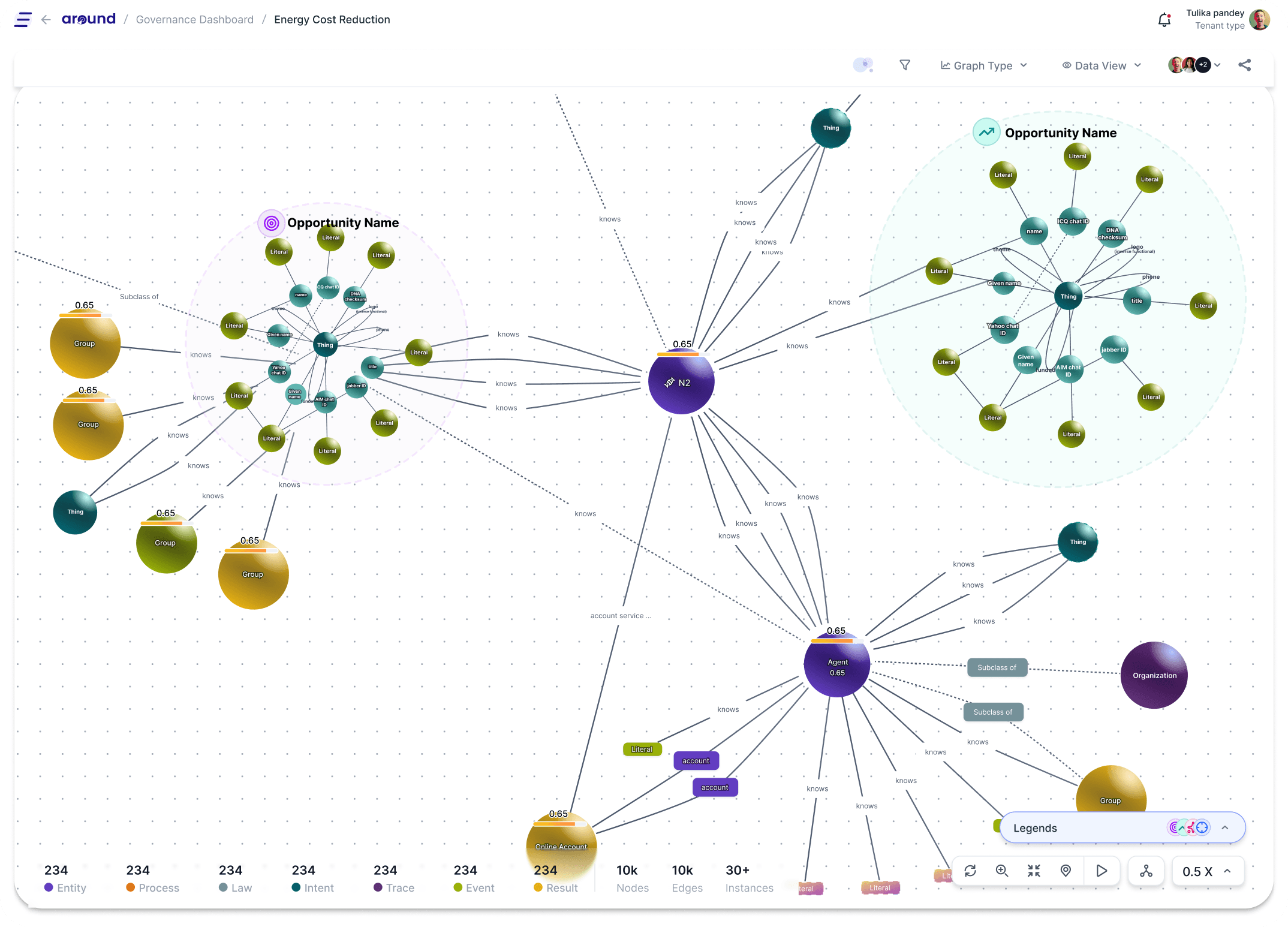
The breakthrough was realizing that the interface did not need to be reinvented for every agent. Each agent already had a structured graph of intents, entities, actions, results, laws, processes, and traces. Instead of manually inventing screens for every agent, the UI can be composed from graph node types and relationships.

Node types

Node types

Node type

Node type

UI Responsibility

UI Responsibility

Intent

Intent

Dashboard

Dashboard

Entity

Entity

Object card, listing, detail

Object card, listing, detail

Result

Result

Chart dashlet

Chart dashlet

Event

Event

Action

Action

Trace

Trace

Activity / audit / trace

Activity / audit / trace

Law

Law

Constraint / governance

Constraint / governance

Process

Process

Workflow

Workflow

6

The MetaUX Pattern

A reusable grammar for agent interfaces.

A reusable grammar for agent interfaces.

1

Intent becomes a dashboard

Intent becomes a dashboard

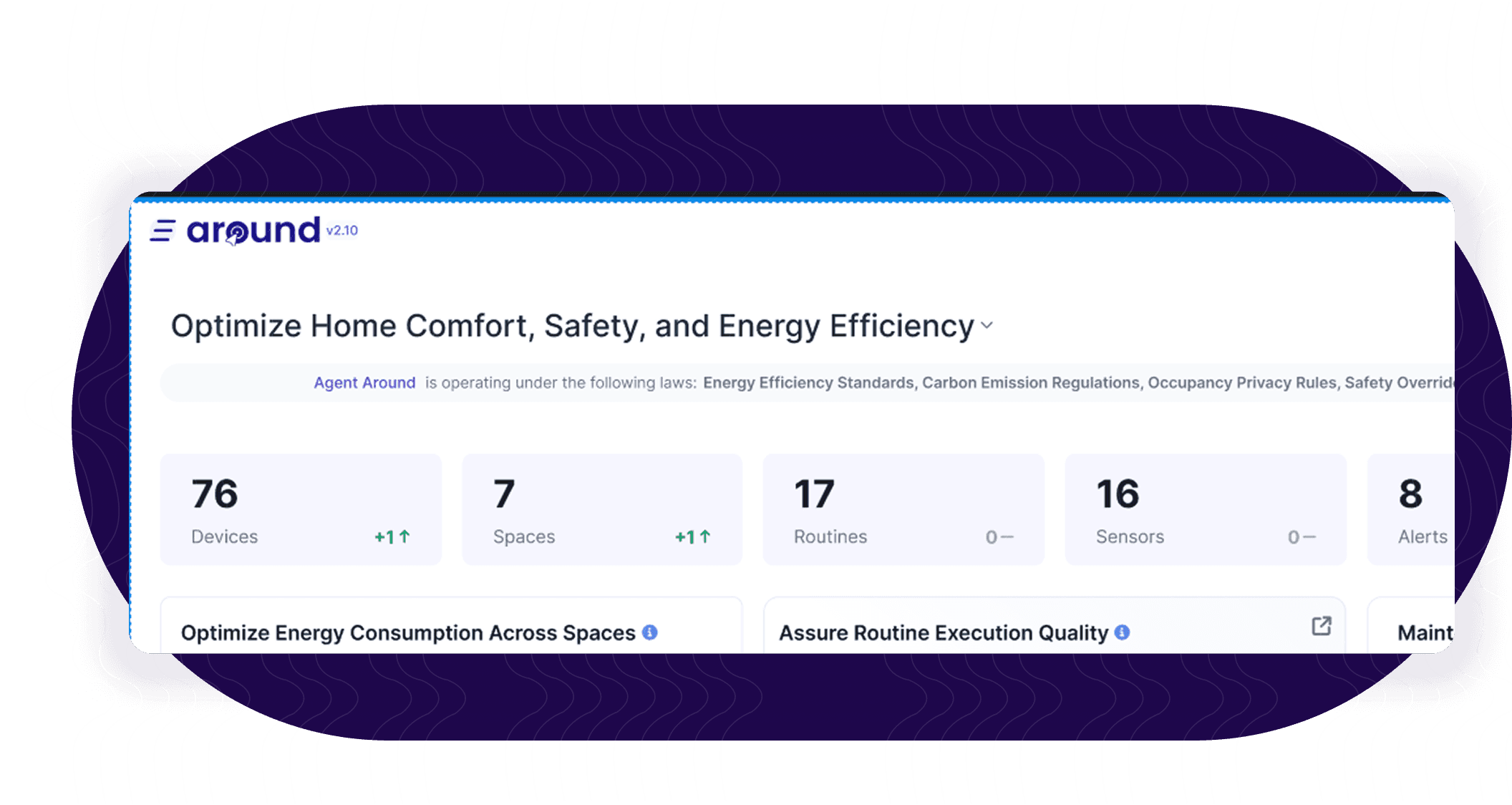
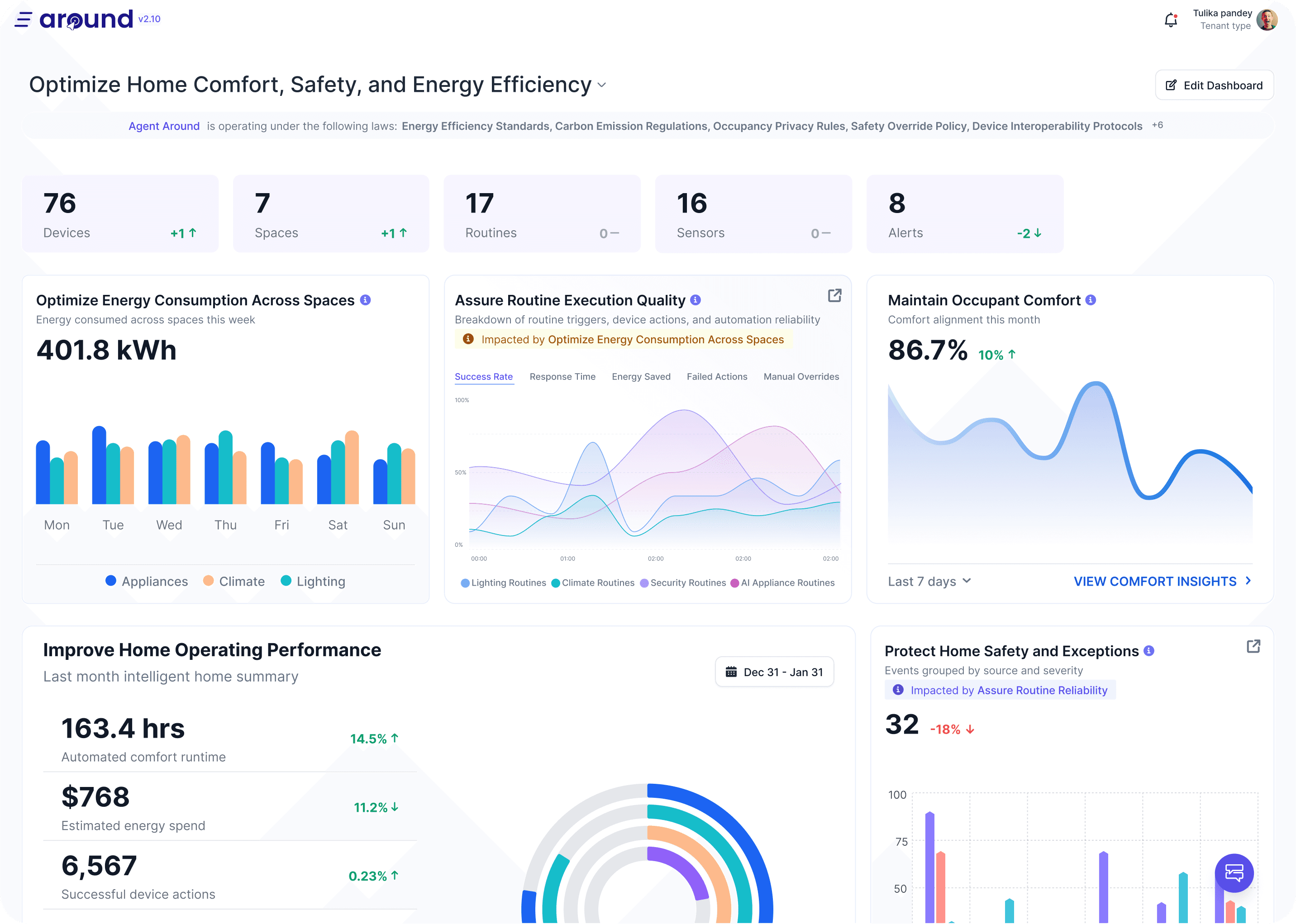
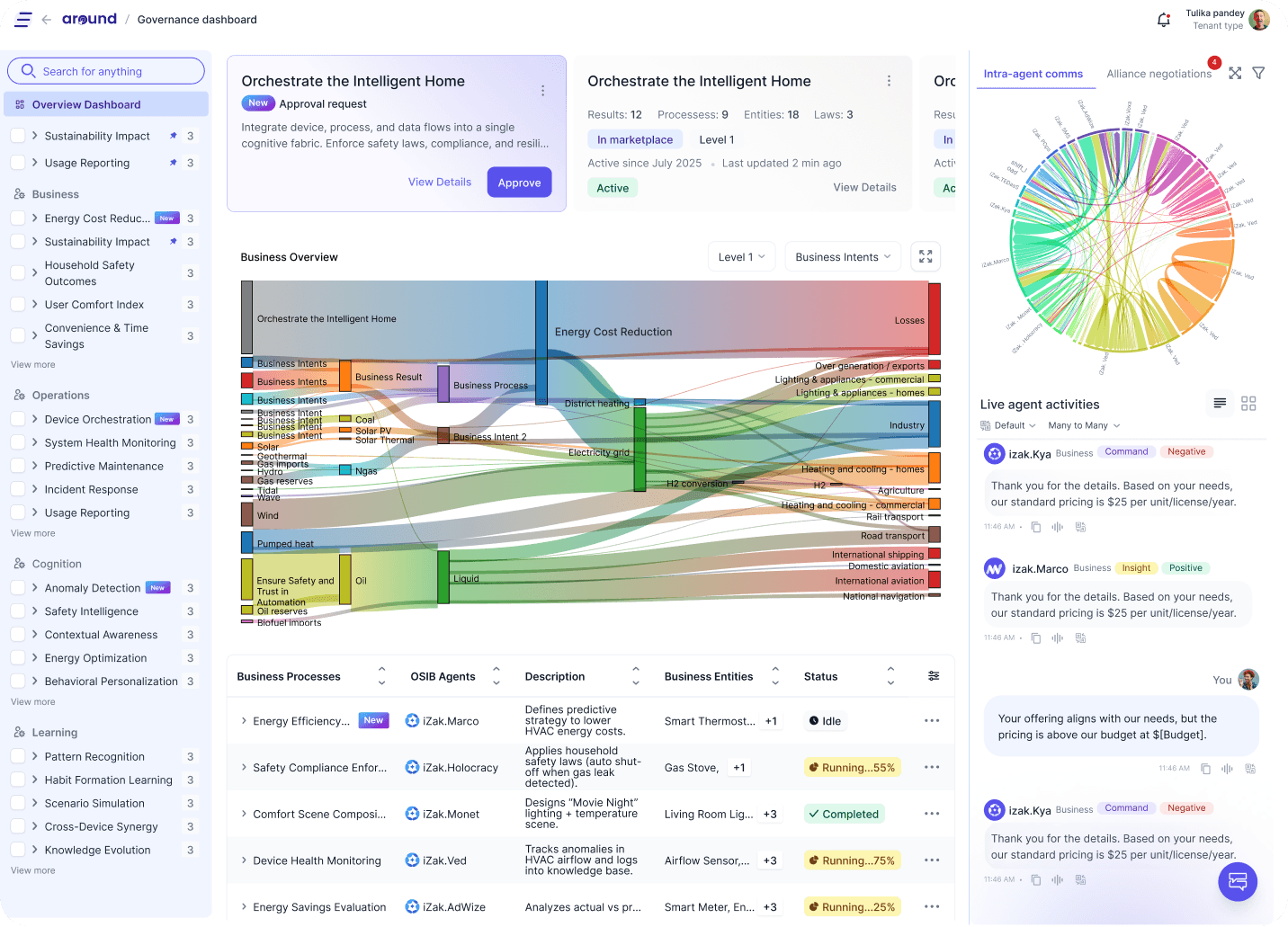
Each Business Intent becomes a dashboard tab. Users switch between dashboards based on what they are trying to achieve.

Examples

Smart home automation agent

  • Optimize Energy & Cost

  • Run Office Routines

  • Manage Devices

DevSec Ops automation agent

  • Govern Policies

2

Entity becomes object cards, lists, and details

Entity becomes object cards, lists, and details

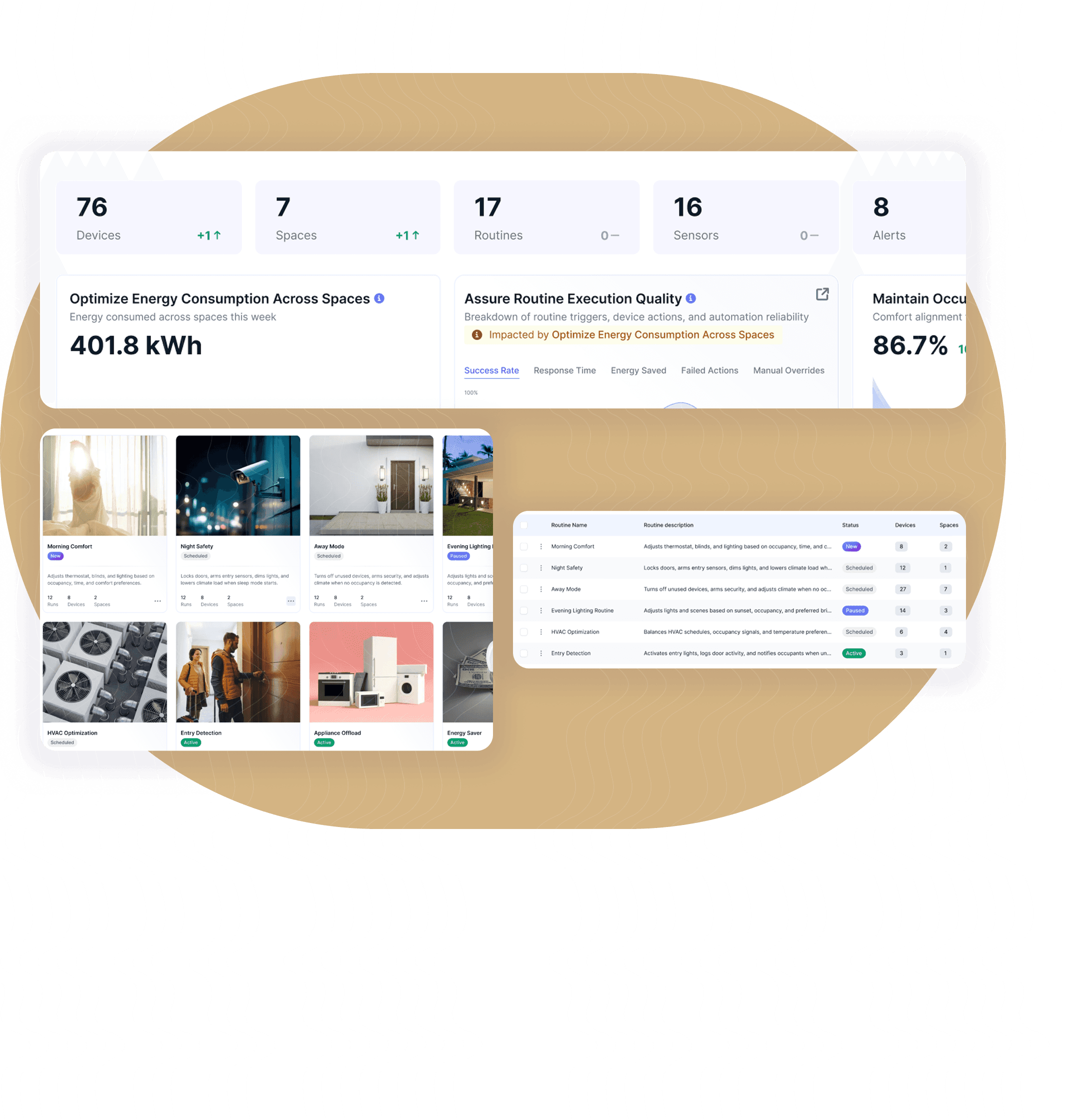
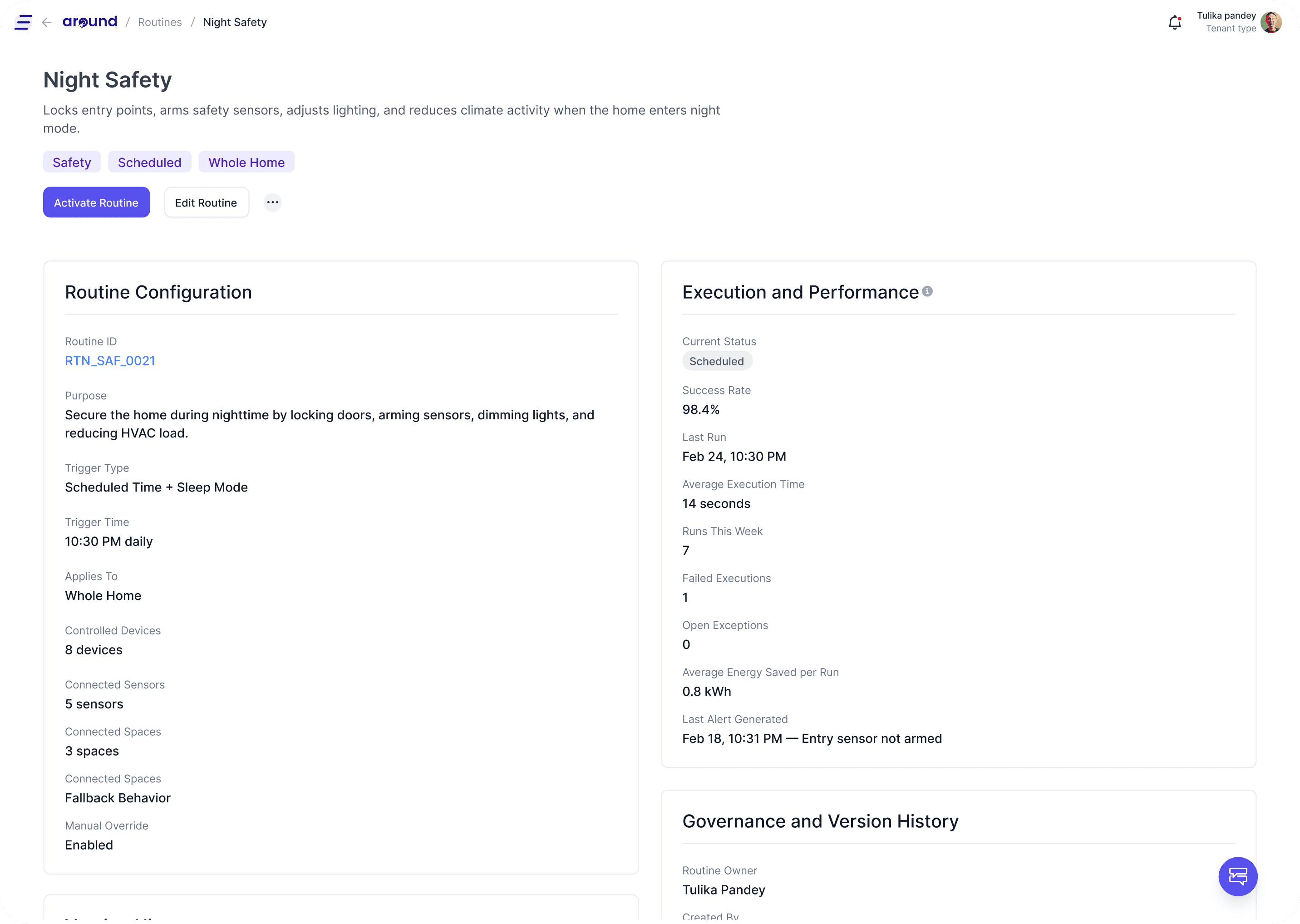
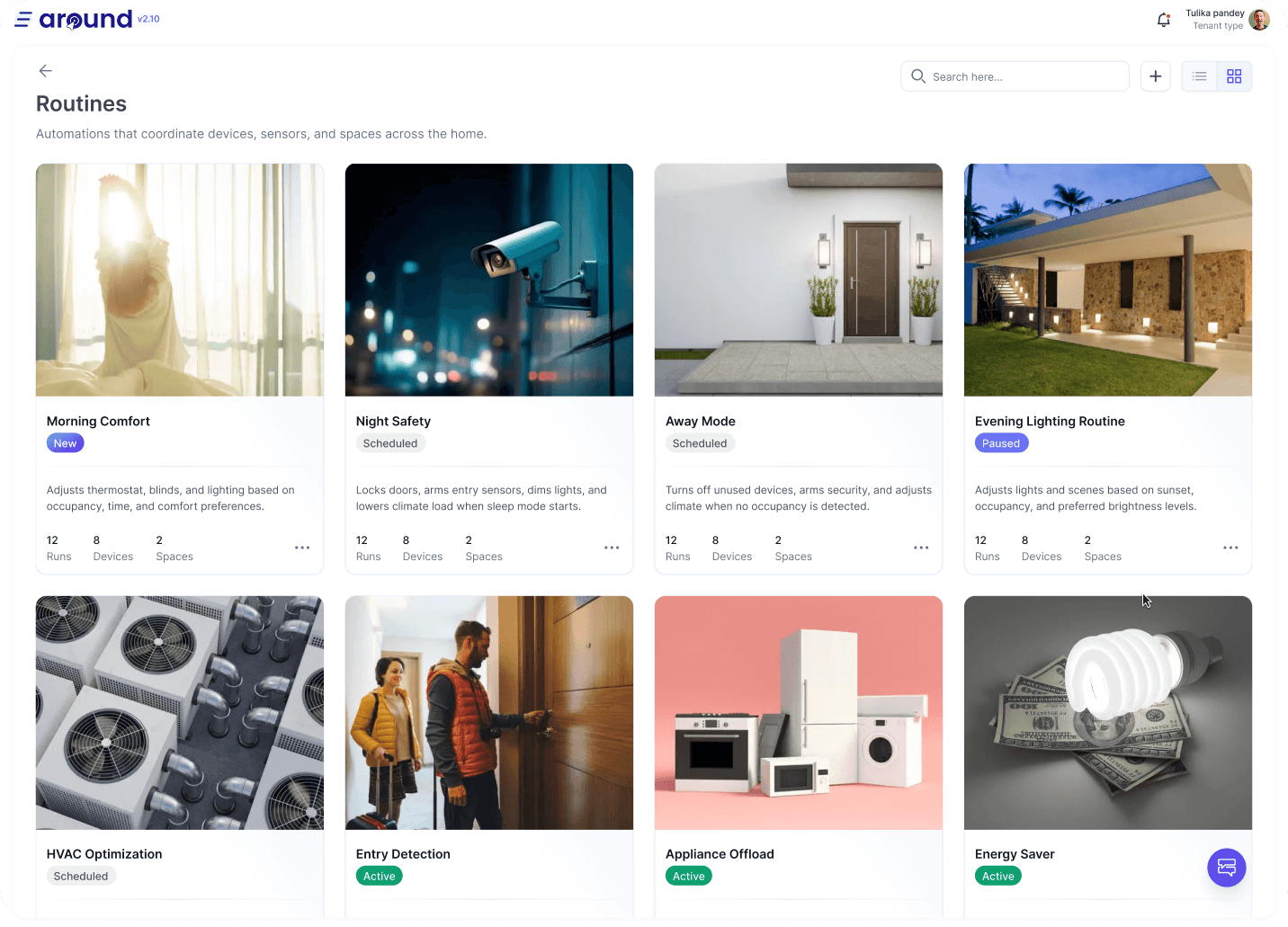
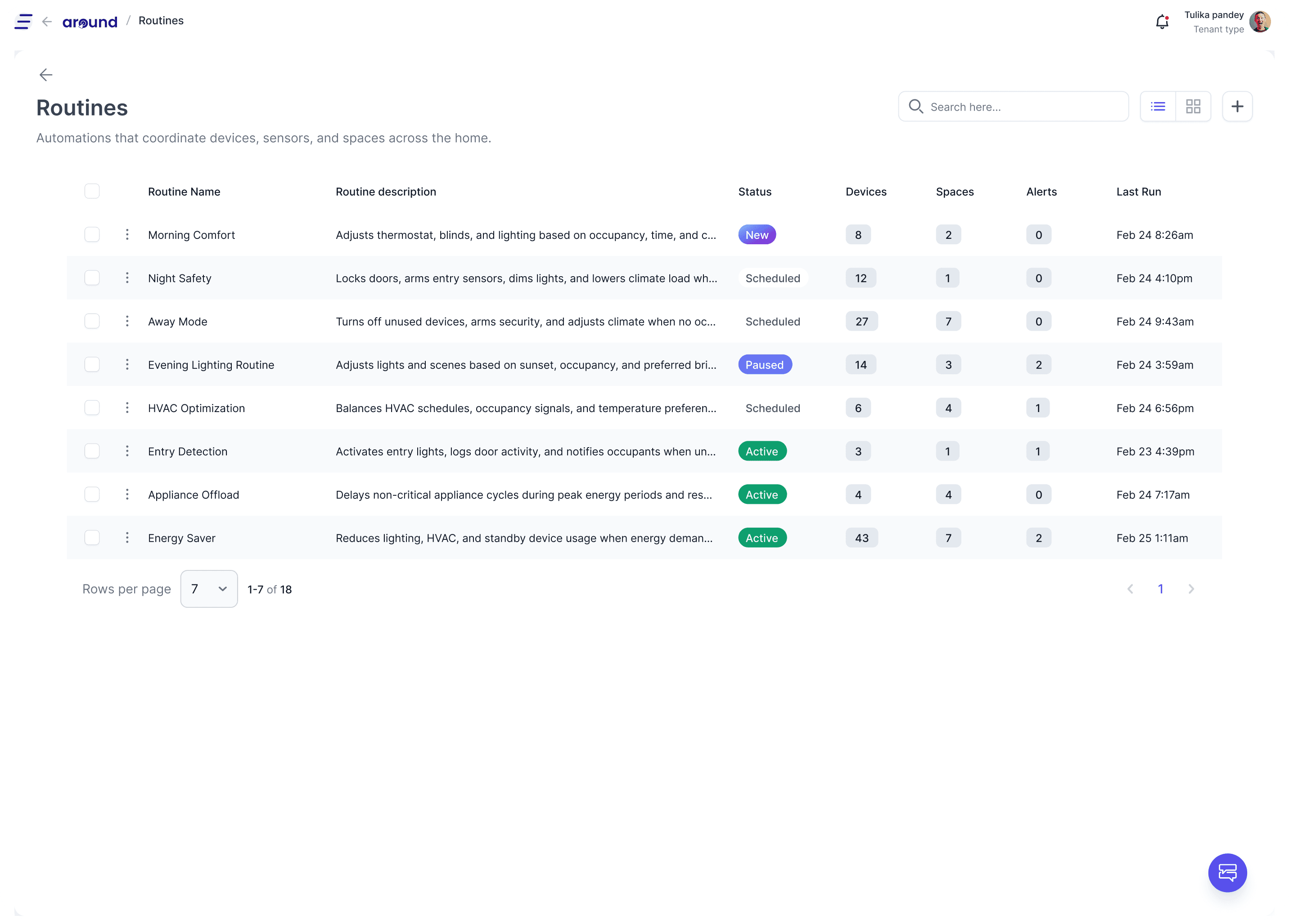
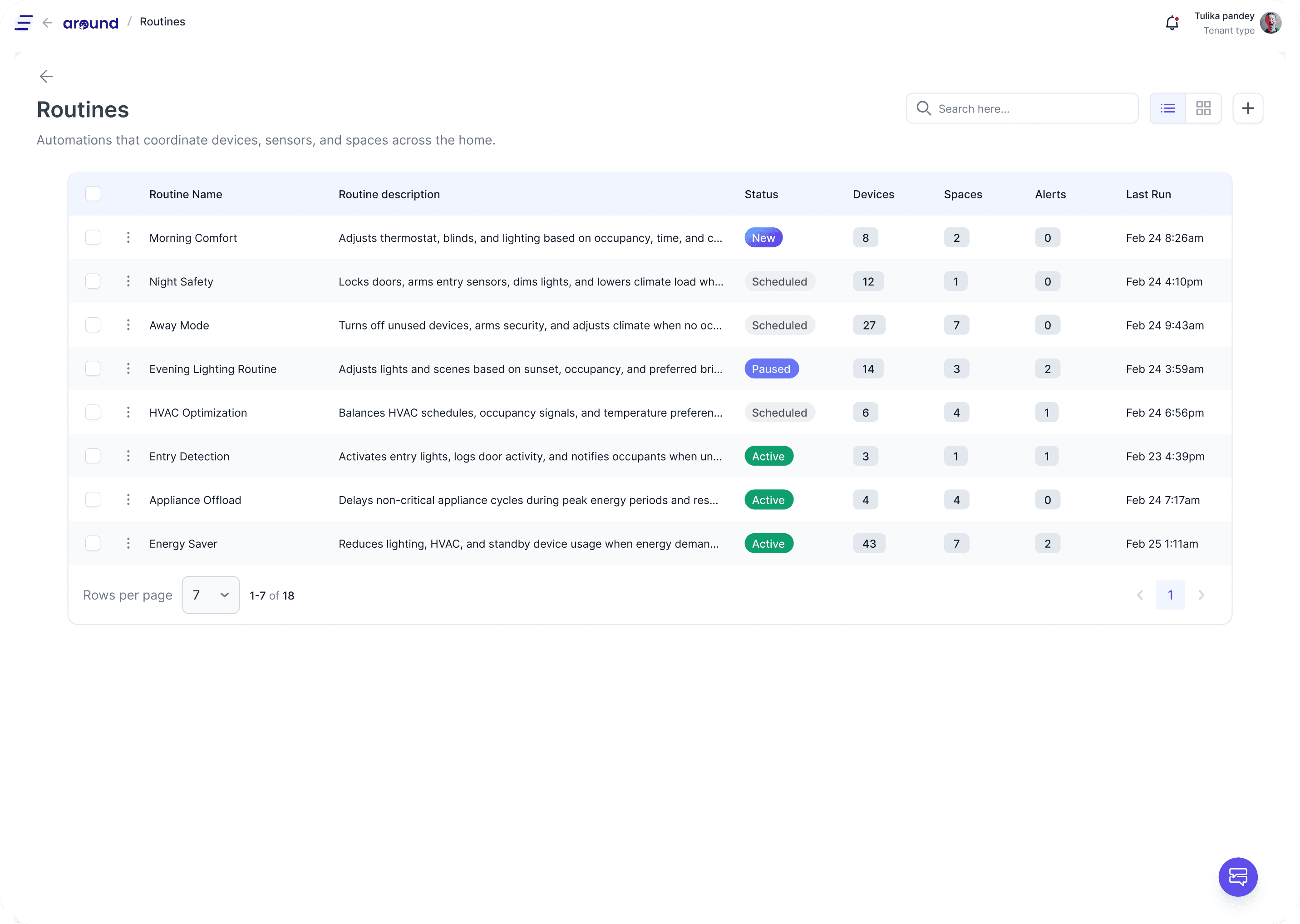
Business Entities appear as object cards on dashboards. They are represented as cards, listings, details, and records.


Clicking a BE card opens a BE listing page with:

  • card/table toggle

  • search

  • filter

  • sort

  • standard and BE-specific actions

Business Entities appear as object cards on dashboards. They are represented as cards, listings, details, and records.


Clicking a BE card opens a BE listing page with:

  • card/table toggle

  • search

  • filter

  • sort

  • standard and BE-specific actions

Examples

Smart home automation agent

  • Devices

  • Routines

DevSec Ops automation agent

  • Policies

  • Infrastructure

  • Pipelines

3

Result becomes measurable output

Result becomes measurable output

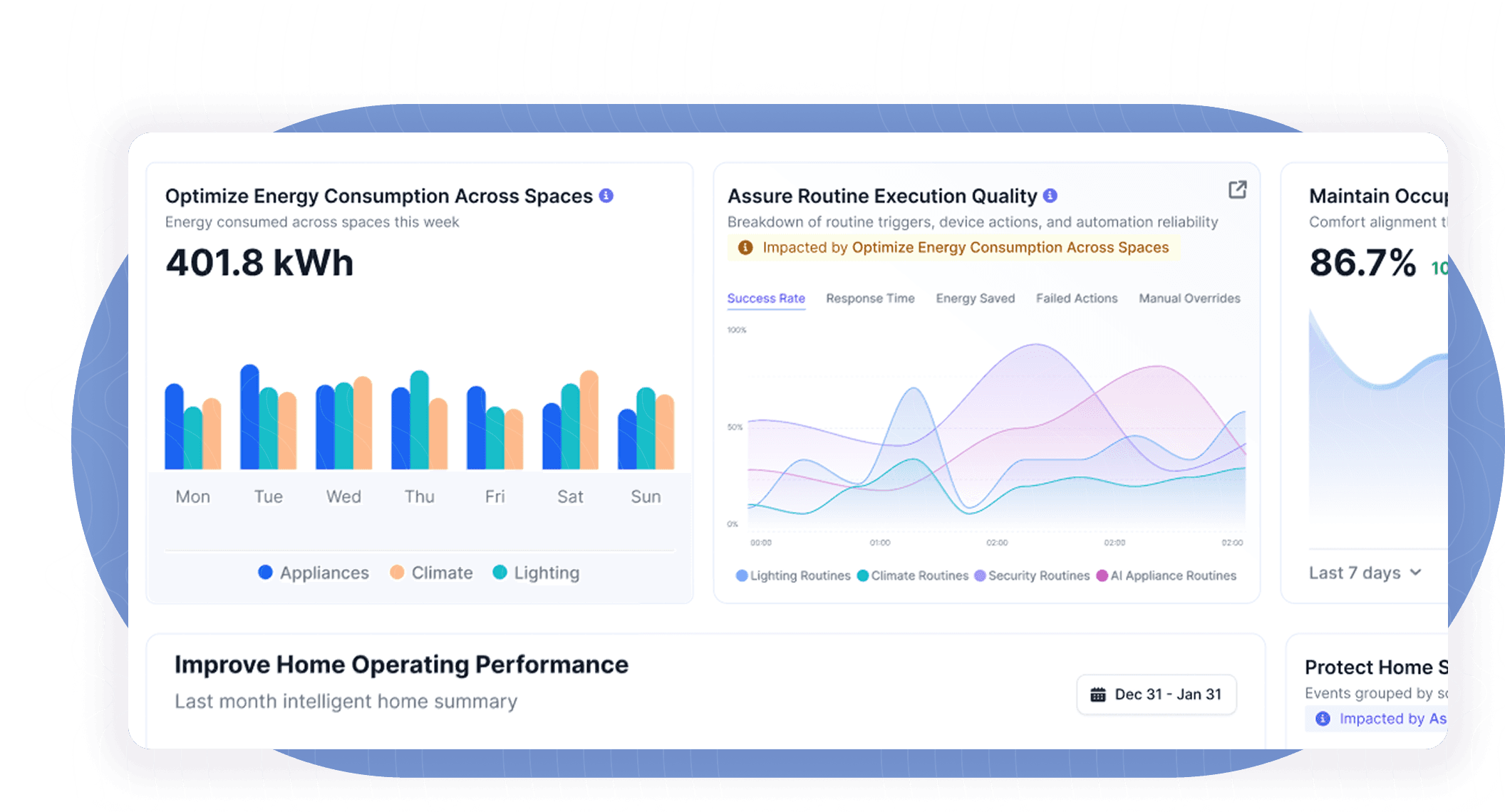
Business Results become charts, metrics, comparisons, and dashlets.

Business Results become charts, metrics, comparisons, and dashlets.

Examples

Smart home automation agent

  • Energy Usage Pattern vs Baseline

  • Peak Load Hotspots

DevSec Ops automation agent

  • Builds Trend

  • Policy Violation Trend

4

Events becomes action

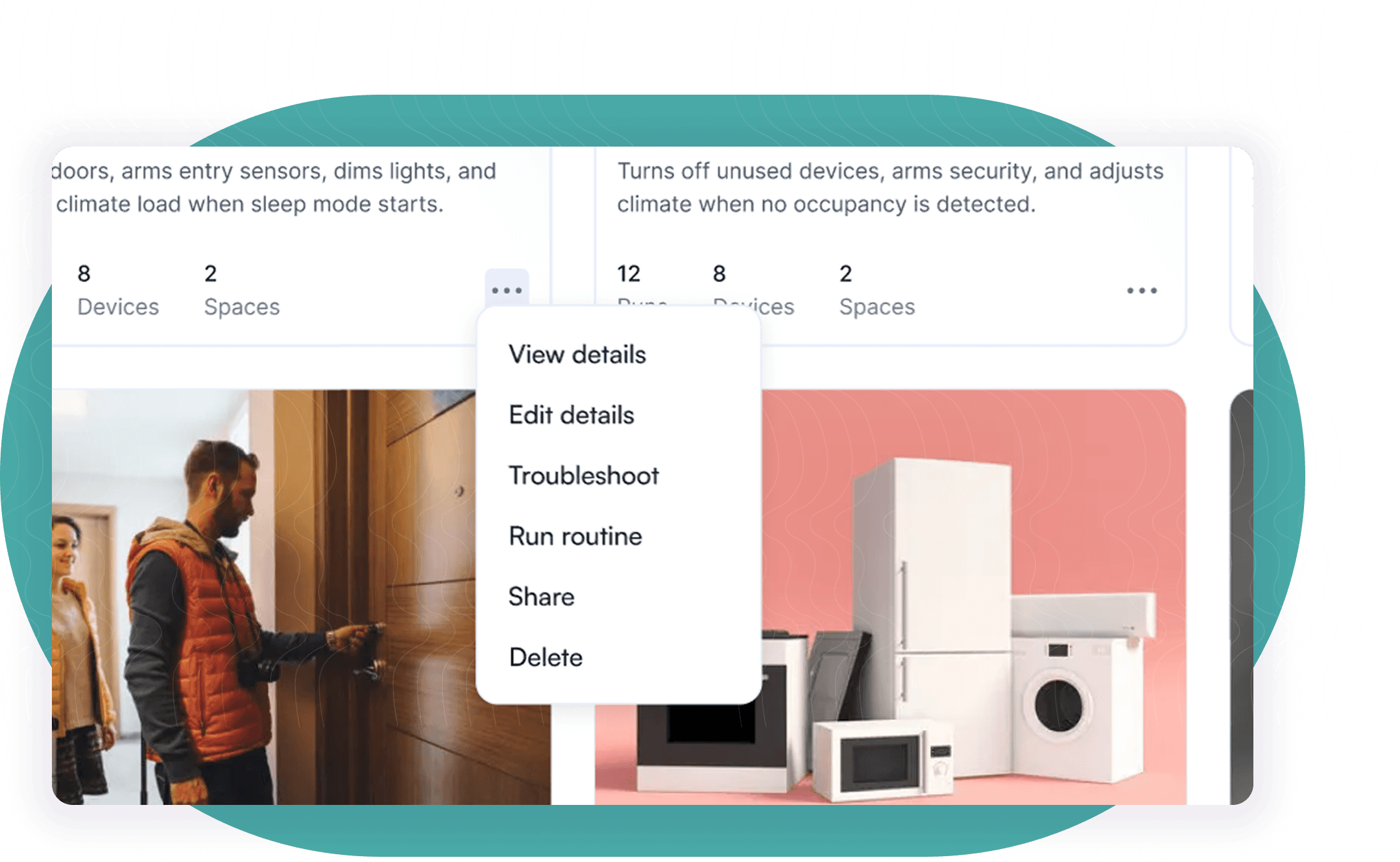
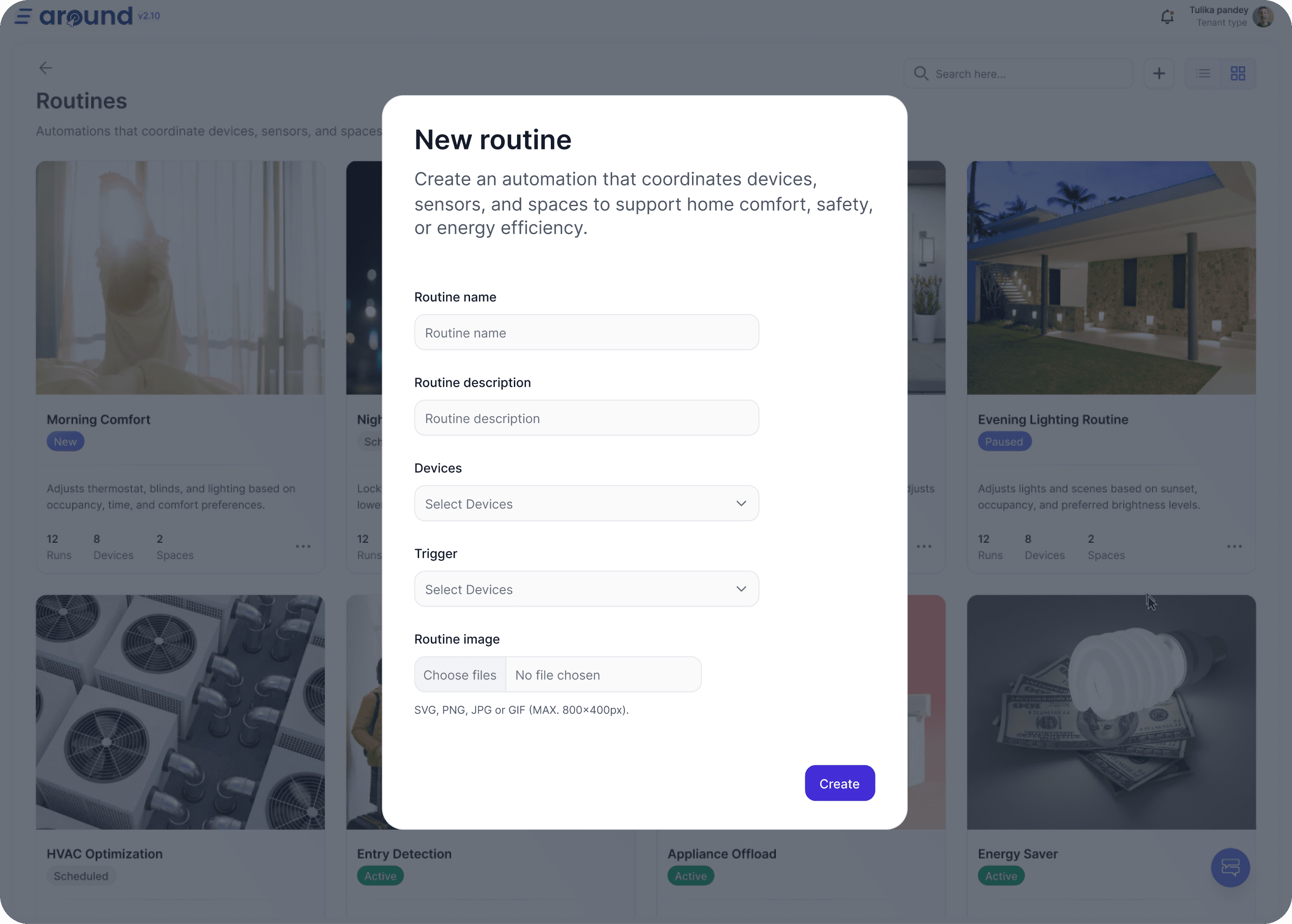
Event nodes become contextual actions specific to the entity.

Examples

Smart home automation agent

  • Troubleshoot device

  • Create routine

DevSec Ops automation agent

  • Request approval

  • Run scan

  • Edit workflow

5

Trace becomes feedback and traceability

Trace becomes feedback and traceability

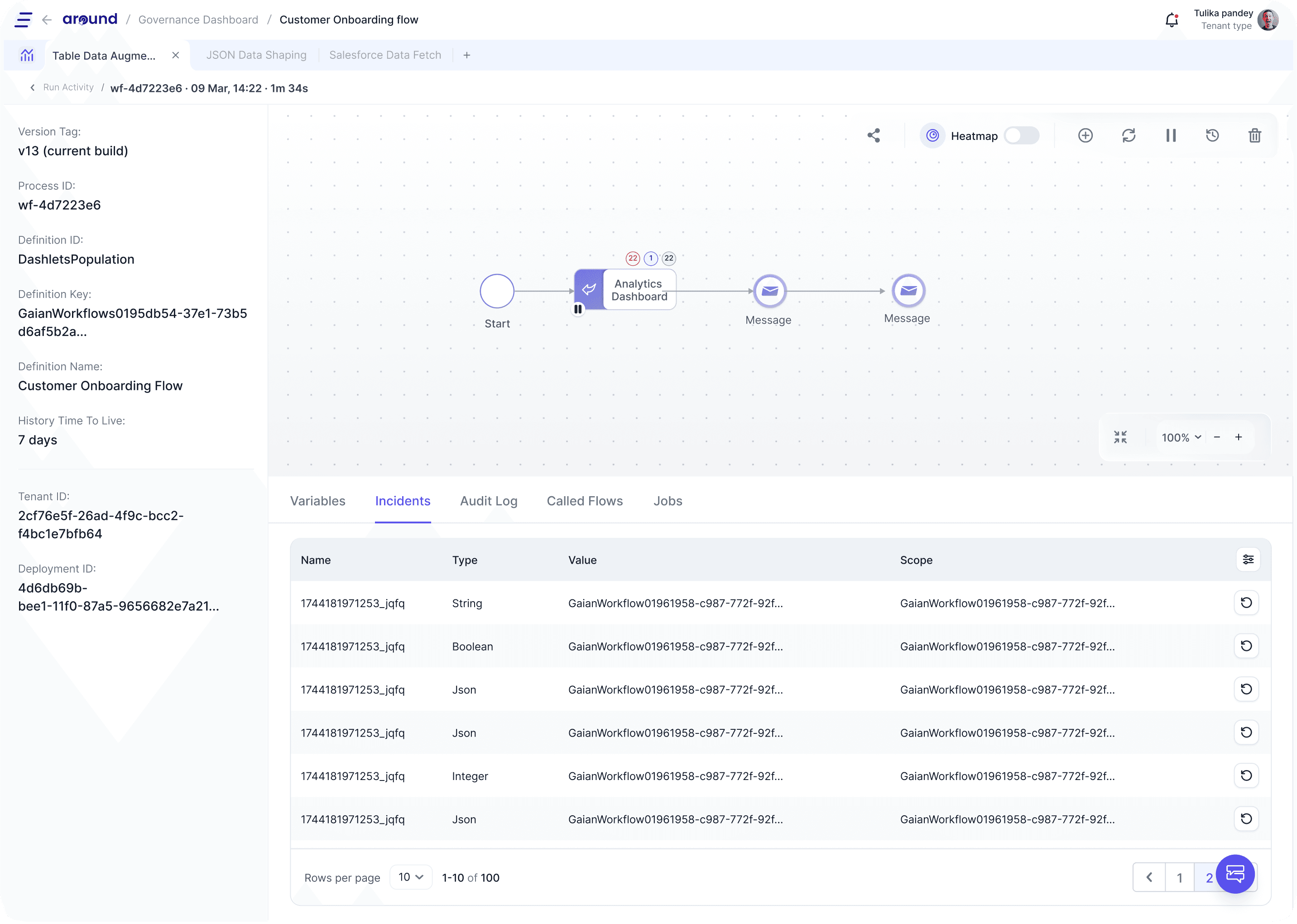
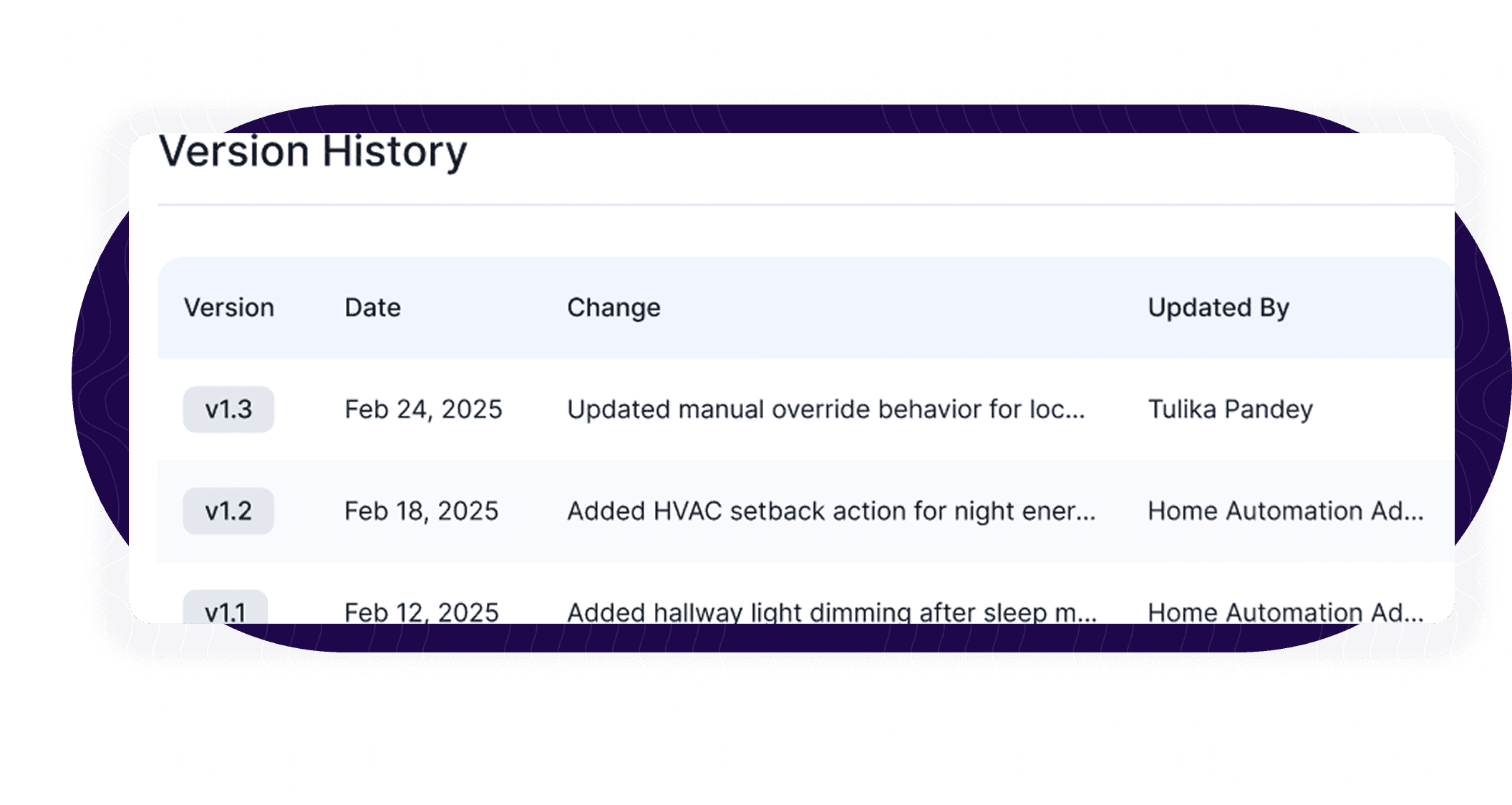
Business Traces become activity logs, audit trails, and action history.
6

Law becomes governance

Law becomes governance

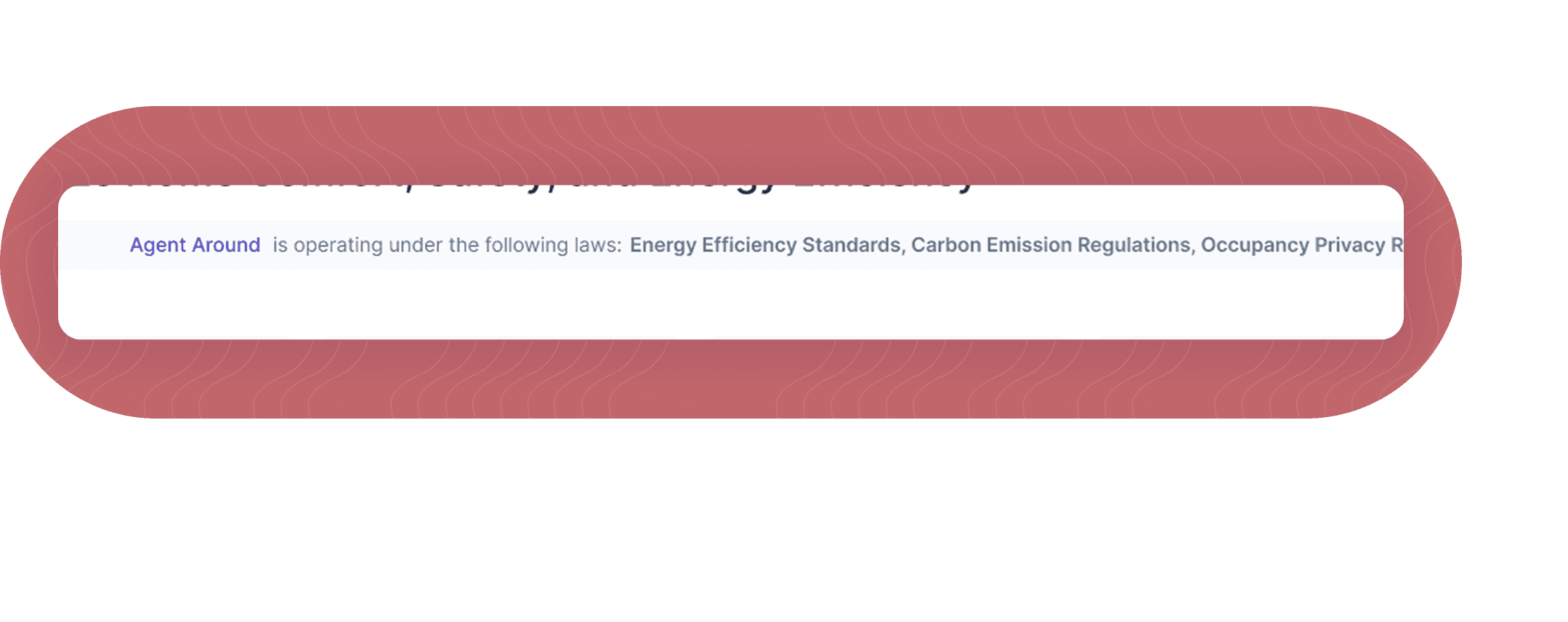
Business Laws control visibility, restrictions, laws, and constraints. For business intents and results, they appear as contextual information. For entity-level restrictions, the experience can hide restricted actions/fields.

Business Laws control visibility, restrictions, laws, and constraints. For business intents and results, they appear as contextual information. For entity-level restrictions, the experience can hide restricted actions/fields.

7

Operator Experience

Operator journey: from intent to action

Operator journey: from intent to action

For operators, MetaUX translated graph complexity into task-first interfaces. Users could move from intent to object to action without needing to understand the underlying graph model.

Operators do not need to understand the graph

They see dashboards, objects, actions, charts, and traces

The pattern reduces cognitive load

The flow stays consistent across agents

8

Builder Experience

Builder journey: shaping and governing the agent

Builder journey: shaping and governing the agent

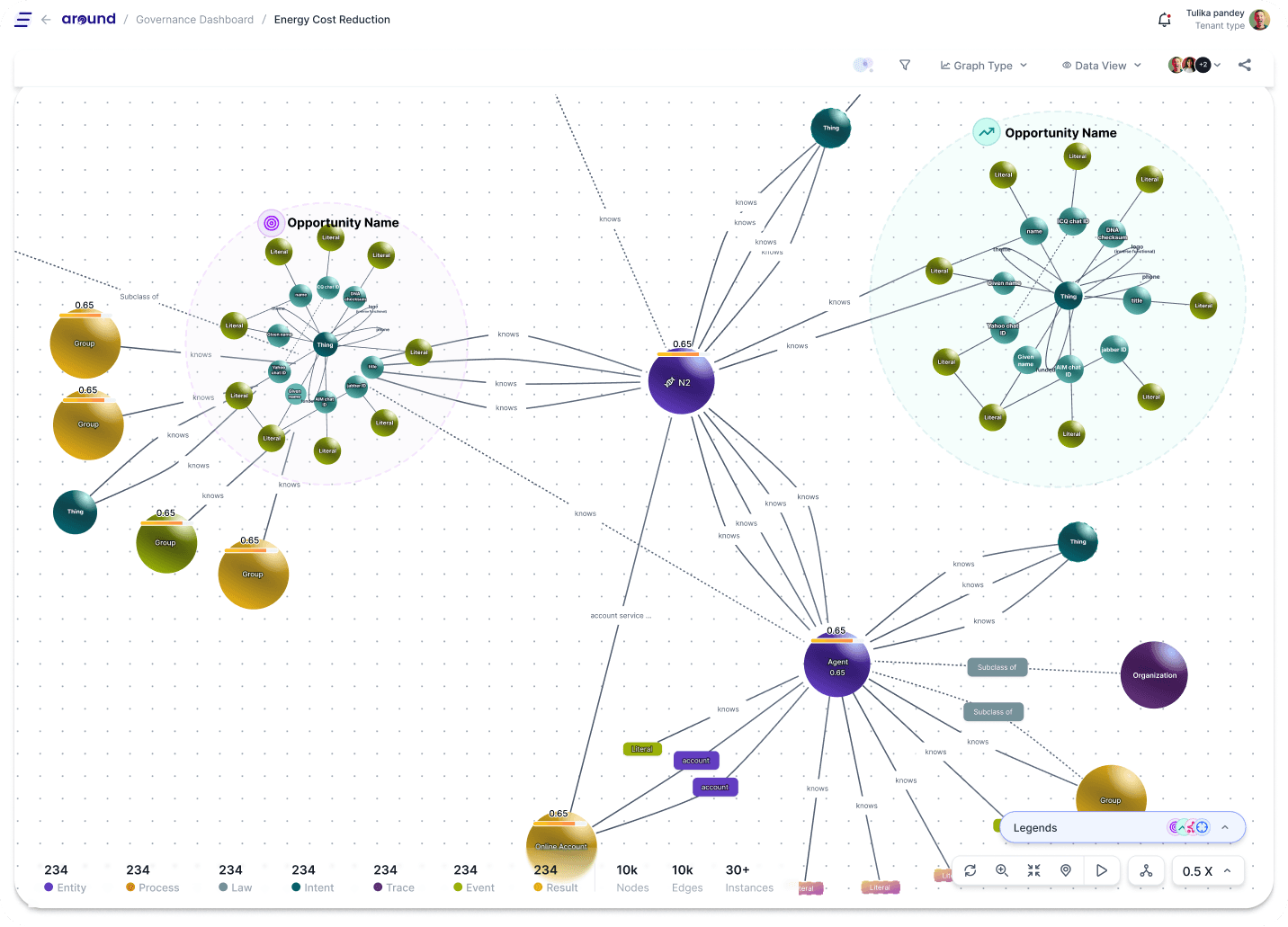
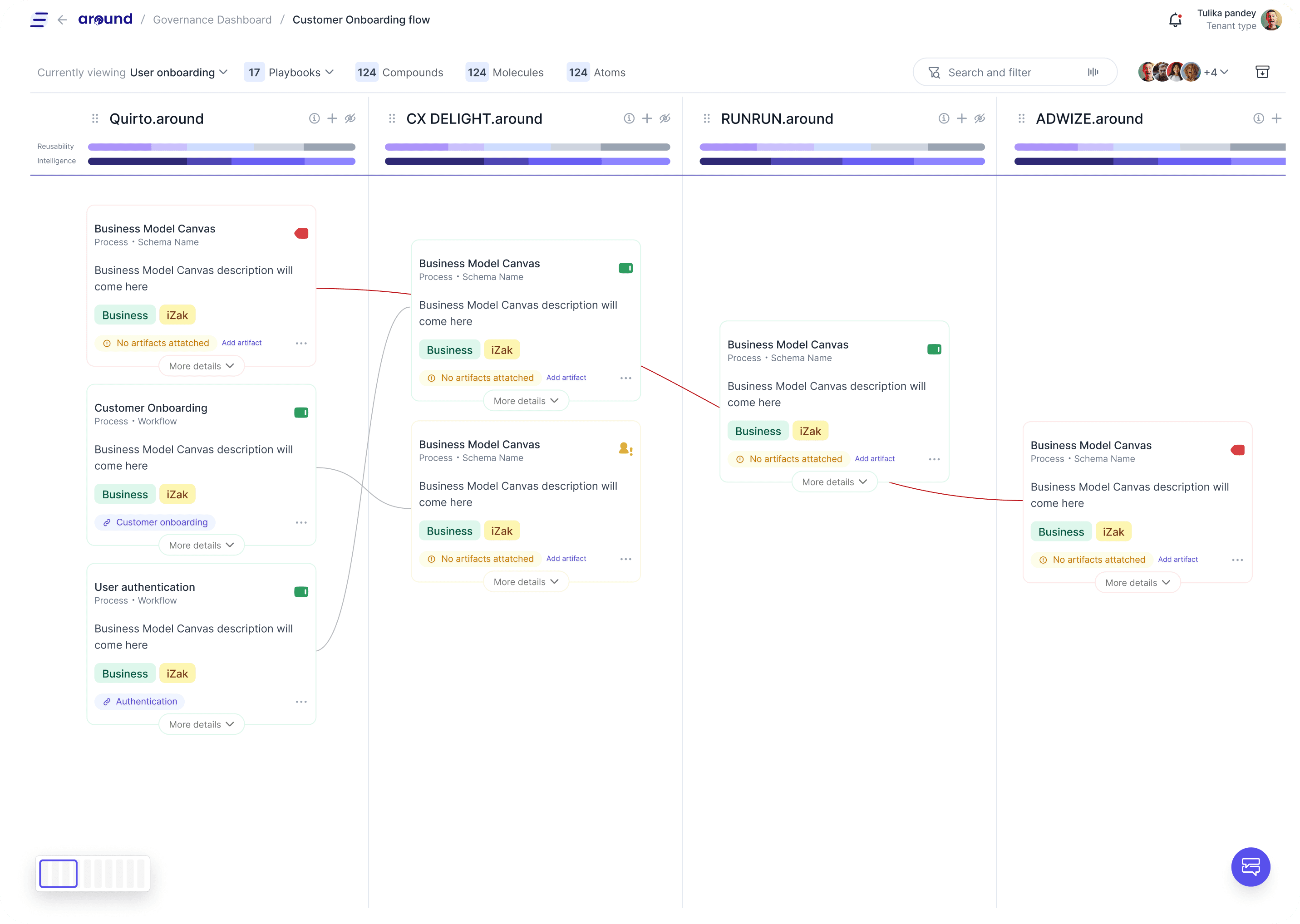
Builders needed a different experience from operators. While operators use the agent, builders shape the agent. The builder experience exposes the graph structure, so agent owners could manage intents, laws, results, processes, workflows, schemas, and executable artifacts.


They shape the agent’s capabilities, governance, laws, and executable artifacts. The graph becomes a product surface. Governance is part of the product model.
9

Product System: How MetaUX Scales

From reusable UX to reusable product architecture

From reusable UX to reusable product architecture

MetaUX turned repeated design work into a product architecture. Instead of designing each agent UI from scratch, teams could apply the same graph-to-interface grammar and let each agent’s structure determine the experience.

Product design contributions
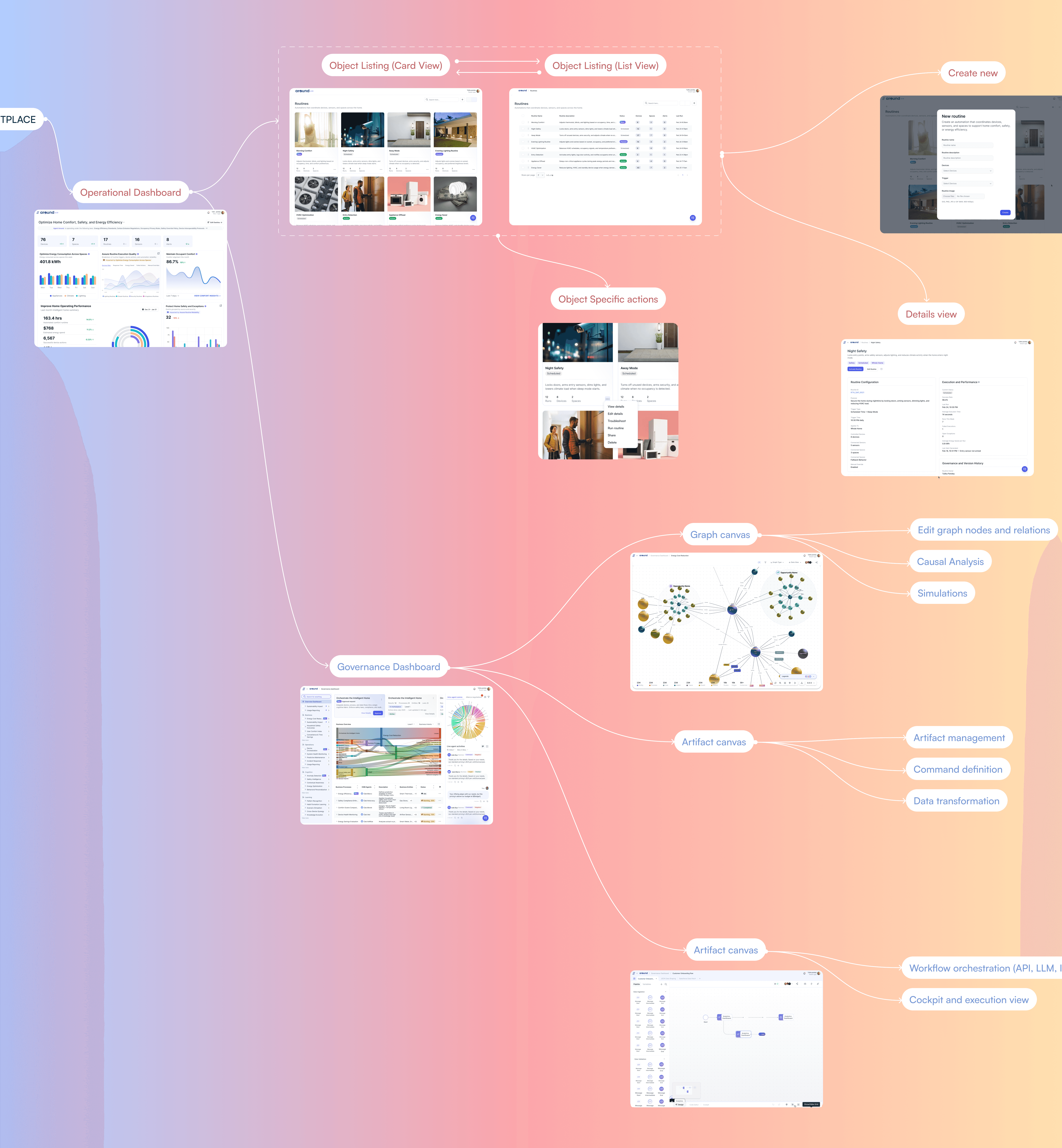
  • Standardized how graph nodes map to interface patterns

  • Reduced need for one-off design decisions

  • Created reusable flows for dashboards, lists, details, forms, traces, and governance

  • Supported both operators and builders

  • Allowed new agents to inherit a baseline experience quickly

  • Standardized how graph nodes map to interface patterns

  • Reduced need for one-off design decisions

  • Created reusable flows for dashboards, lists, details, forms, traces, and governance

  • Supported both operators and builders

  • Allowed new agents to inherit a baseline experience quickly

10

Strategic Value

Preparing Mobius for agent-generated UX

Preparing Mobius for agent-generated UX

Strategically, MetaUX acts as a bridge between today’s human-designed interfaces and tomorrow’s agent-generated experiences. Because the pattern is graph-based, it creates a repeatable structure that can eventually be learned and automated by a UX agent.

Strategy points

  • Reduces delivery bottlenecks

  • Supports tenant-specific variation

  • Makes interface generation more repeatable

  • Creates training structure for a future UX agent

  • Treats UX as product infrastructure

11

Impact

For baseline journeys covered by the MetaUX pattern, agent UI setup time dropped from roughly one month to one day. More importantly, the interface layer became a reusable product capability instead of a repeated custom design effort.

Before

Before

After

After

Custom UI per agent or tenant

Custom UI per agent or tenant

Reusable graph-driven interface pattern

Reusable graph-driven interface pattern

Slow setup cycles

Slow setup cycles

Baseline setup reduced from ~1 month to ~1 day

Baseline setup reduced from ~1 month to ~1 day

Repeated dashboard/list/detail/form work

Repeated dashboard/list/detail/form work

Standardized product flows

Standardized product flows

Inconsistent operator experiences

Inconsistent operator experiences

Consistent intent-to-action journey

Consistent intent-to-action journey

Governance treated separately

Governance treated separately

Governance integrated into builder experience

Governance integrated into builder experience

Manual interface thinking

Manual interface thinking

Foundation for future UX automation

Foundation for future UX automation

12

What I Would Improve Next

Tulika Pandey ⏤ 2026